

Black And White Architectural Drawings
Architectural Drawings: The Latest Architecture and News
Drawing from an Architect's Perspective: Interview with Ken Shuttleworth to Mark 5 years of The Architecture Drawing Prize

This short essay, written by the author and critic Jonathan Glancey, coincides with the launch of the inaugural Architecture Drawing Prize – a competition curated by the World Architecture Festival, the Sir John Soane's Museum, and Make. The deadline for the award is the 17th of September 2021.
"Is graphicacy a word?" asks Ken Shuttleworth, founder of Make Architects and instigator of The Architecture Drawing Prize. It is. "Like literacy", he says, ", it's certainly what I'm interested in when looking at and judging drawings. It's about a fluency in making and understanding them." The Architecture Drawing Prize is in its fifth year now. "We tend to see very few hand drawings by young architects - they mostly use computers - and, today, most architectural students come from more of a maths and physics than an art background. I still believe, though, that hand drawing is very important."
https://www.archdaily.com/968184/drawing-from-an-architects-perspective-interview-with-ken-shuttleworth-to-mark-5-years-of-the-architecture-drawing-prize Jonathan Glancey
Online Architectural Drawing Workshop with Narinder Sagoo and Jason Parker

Next August 9th at 17:00 BST (12:00 EST) ArchDaily and The Architecture Drawing Prize will be hosting a free-to-attend, live drawing workshop on Zoom with Narinder Sagoo, Art Director at Foster + Partners heading up the practice's Design Communications team and Jason Parker, Director at Make Architects who initiated The Architecture Drawing Prize to give an international platform to the topic.
https://www.archdaily.com/965904/online-architectural-drawing-workshop-with-narinder-sagoo-and-jason-parker Diego Hernández
"Many Architects Think as They Draw. I Don't Do That": In Conversation With Mikkel Frost
Talking to the Louisiana Channel, Danish architect Mikkel Frost, talks about how he visualises his ideas and represents his architectural concepts - through the mediums of pen, ink and watercolours. Frost views his use of drawing as different from other architects, who "think as they draw". Frost, on the other hand, "prints" the image he already has in his mind, saying "I'm many steps ahead of what I draw, basically printing the whiteboard in my mind."
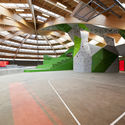
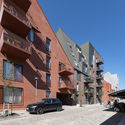

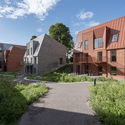
 + 11
+ 11
https://www.archdaily.com/962949/many-architects-think-as-they-draw-i-dont-do-that-in-conversation-with-mikkel-frost Matthew Maganga
The Art of Visual Communication: 12 Tips for Creating Powerful Mood Boards

Design projects rely heavily on visual tools that illustrate the project's features and overall atmosphere, and whether you are an architect, interior designer, furniture designer, or engineer, the term 'mood board' has definitely come up at some point during the early stages of the design process. Generally speaking, images have immense powers of influencing and inspiring their viewers, so putting together a powerful mood board can be a game changer for the architect, the visual artist, and the clients, and can amplify the project's story telling process. So what is a mood board and how can you create one?


 + 10
+ 10
https://www.archdaily.com/960594/the-art-of-visual-communication-12-tips-for-creating-powerful-mood-boards Dima Stouhi
Not Experienced with Rendering? 4 Techniques you Can Use Instead

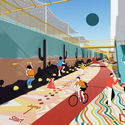
If there is any word that describes what architectural renders look like nowadays, it would be: impressive. The immense world of rendering has allowed people to engage in virtually-built environments, exploring each space and experiencing what they might hear or feel as they walk by one room to another without being physically present in the project.
The main purpose of a render is to help viewers visualize what the final result of the project will look like. Whether it is for presentation or construction purposes, architects need to translate their visions in a way that helps people who were not involved in the ideation process understand the space and the experiences that come with it. However, not all architects have the proper skills or the time to create such hyper-realistic environments, but with the exceptional quality of visuals being produced nowadays and the rising demand, it has become somewhat mandatory for every project to be presented as a realistic 3D render. So if you are one of those architects who don't have the skills nor time, here are ways you can present your project as an immersive visual experience that translates its identity without resorting to 3D software.


 + 11
+ 11
https://www.archdaily.com/959618/not-experienced-with-rendering-4-techniques-you-can-use-instead Dima Stouhi
Mapping the City of the 21st Century: Desplans and KooZA/rch Open up the Discourse to Young Creatives

Desplans and KooZA/rch have revealed the three final winners of the #mycityscape competition. Inviting young creatives to this conversation, the open call questions the definition of the city, by asking "What establishes the identity of a city? What distinguishes one urban environment from the other? And What defines our relationship to the built landscape we inhabit?"
Trying to find the tools to map the city of the 21st century, the competition encouraged young creatives to record the essence of their cityscape into one image. After selecting 12 shortlisted entries, the contest solicited a wider audience to decide the final winning designs, by voting for their favorites on social media. Following the release of the results, Christele Harrouk from ArchDaily had the chance to talk about the #mycityscape competition with both Desplans and KooZA/rch, discussing the theme and the whole process. Discover in this article the exchange as well as the final winning designs.
https://www.archdaily.com/956245/mapping-the-city-of-the-21st-century-desplans-and-kooza-rch-open-up-the-discourse-to-young-creatives Christele Harrouk
The Best Architectural Drawings of 2020

ArchDaily is continuing a six-year-long tradition of celebrating the best architecture drawings of the year. The 2020 edition highlights a carefully-curated collection of architectural drawings and visualizations with a wide variety of techniques and representations, all orientated towards a common goal of sharing ideas, visions, and designs.


 + 59
+ 59
https://www.archdaily.com/955754/best-drawings-of-2020 ArchDaily
Reaffirming the Essential Role of Drawing in Design

This article was originally published on Common Edge.
In 2012, the Yale School of Architecture held a conference on the topic of drawing. It posed a couple of provocative questions: Was the study and practice of architecture already beyond it? Was it is even necessary to draw in order to be an architect? Mark Alan Hewitt's new book, Draw in Order to See (ORO Editions), is a resounding affirmation that not only must architects draw, they cannot help but do so—it's like breathing. The connection between the hand and the eye, between a soft pencil and a toothy sheaf of paper, is how architects, in fact, "see."

https://www.archdaily.com/955024/reaffirming-the-essential-role-of-drawing-in-design Michael J. Crosbie
A Planned Reprint of a Popular Book on Louis Kahn Brings His Drawings within Reach

There are plenty of books about the buildings of late American architect Louis I. Kahn, including those he authored. But his drawings hold a special fascination for his peers and fans, which explains why the blog Designers and Books is launching a Kickstarter to fund the reissue of one 1962 compilation of his sketches, which has been out of print for decades.

https://www.archdaily.com/951475/a-planned-reprint-of-a-popular-book-on-louis-kahn-brings-his-drawings-within-reach Kelly Beamon
Before and After Renovations: Changes in Architectural Plans
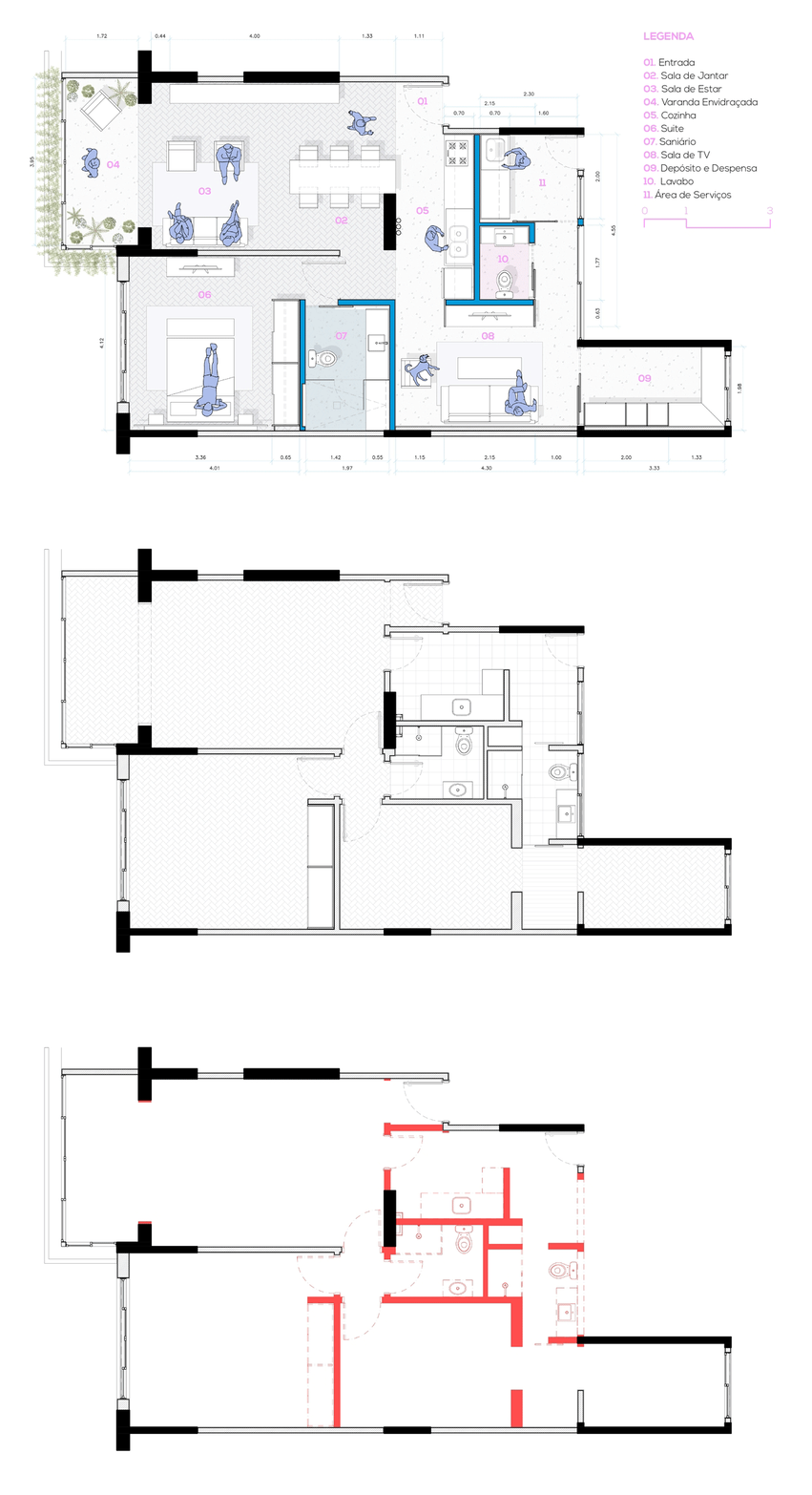
One of Paulo Mendes da Rocha's main design gestures in the Pinacoteca renovation project was to create a new longitudinal axis for circulation, moving its entrance to the south face of the building. Metallic walkways, which cross internal courtyards covered by skylights, enable new dynamics of circulation between the rooms, transforming a neoclassical building into a museum with a contemporary program.
The ability to completely renovate a space by demolishing parts, making additions, altering functionality, and improving ambience is one of the most admired functions of the architect. In housing, this significance is even more apparent, since adapting housing to contemporary demands, through a well-thought-out plan, can drastically improve the quality of life of the occupants.


 + 24
+ 24
https://www.archdaily.com/947969/before-and-after-renovations-changes-in-architectural-plans Eduardo Souza
"Thom Mayne: Sculptural Drawings" Opens at the Museum for Architectural Drawing in Berlin

Running from 11 September till 15 November 2020, "Thom Mayne: Sculptural Drawings" is the latest architectural exhibition at Tchoban Foundation Museum for Architectural Drawing in Berlin. Curated by Kristin Feireiss, together with Esenija Bannan, the project questions the nature of architectural drawing and how it influenced the work of Thom Mayne, founder of Morphosis. The exhibition features Mayne's works dating from 1979 through 2020 and leads visitors from "traditional" drawings and new experimentations with techniques, through to 3D paintings.


 + 12
+ 12
https://www.archdaily.com/947201/thom-mayne-sculptural-drawings-opens-at-the-museum-for-architectural-drawing-in-berlin Christele Harrouk
Une Ville Dessinée

The future of the European city is the central theme for Sergei Tchoban. It is evident that the language of contemporary architecture and the size of urban gestures contrast with the structure of the historical or traditional European city. Is it possible to harmonize and regulate these two positions? Is there a quality in the spontaneity or even in the chaos that can arise?
The exhibition ‚Une Ville Dessinée / A Drawn City' reflects the high-contrast interplay between historical and modern architecture, as it is so strongly traced in modern cities. It brings together visualized and constructed ideas on paper, presents
https://www.archdaily.com/934332/une-ville-dessinee Rene Submissions
The Best Architecture Drawings of 2019

 + 77
+ 77
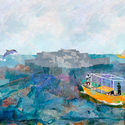
We are continuing our five-year-long tradition of celebrating "The Best Architecture Drawings of the Year." The 2019 edition sees a carefully-curated collection of architectural drawings with a wide variety of techniques and representations, all orientated towards a common goal of sharing architectural ideas, visions, and designs.
https://www.archdaily.com/930787/the-best-architecture-drawings-of-2019 Fernanda Castro
30 Projects Explained Through Architectural Gifs
.gif?1463188521)
In order to explain projects and design decisions properly, architects must use often rely on creative representation techniques instead of words. It's part of the job. The quality of drawings - simple, complex, or anything in between - is fundamental for the correct reception of the ideas. Digital media has enabled new ways of representation including animation and adding a new dimension in a single image: processes.
Animated gifs can provide the same amount of information in constructive terms as a section, program distribution as a diagram and main decisions as a master plan, while at the same time showing the progress and chronology of the project.
The following 30 projects use animated gifs as a tool to represent the design process, construction details, use of layers and interior spatial sequences.
https://www.archdaily.com/903052/27-projects-explained-through-architectural-gifs Fernanda Castro
Prized Hand-Drawings Return a Building to an Organically Conceived Whole

A century on, the compelling idea that Modern architecture emerged like some blindingly white, crystalline and disruptive phoenix from the darkness, death and destruction of the First World War is, perhaps, a familiar one. And, yet, the charcoal sketches and chiaroscuro montages Mies van der Rohe made during and after the epochal competition for the Berlin Friedrichstrasse Skyscraper of 1921-22 retain the power to catch the eye, provoke and disturb in our own era of overwhelming imagery much of it produced by and with computer programs.
What is so very remarkable about these century-old visionary drawings is that they portray a future building type - verging on the ethereal and more or less impossible to realize at the time - in the earthiest of drawing materials. It had been a stroke of genius to use charcoal to evoke an architecture of lightness rising from the embers of the trenches that would revolutionize the way we shaped tall buildings and with them our city streets. Such is the power of drawing by hand.


 + 7
+ 7
https://www.archdaily.com/925477/prized-drawings Jonathan Glancey
Studying the "Manual of Section": Architecture's Most Intriguing Drawing

For Paul Lewis, Marc Tsurumaki and David J. Lewis, the section "is often understood as a reductive drawing type, produced at the end of the design process to depict structural and material conditions in service of the construction contract." A definition that will be familiar to most of those who have studied or worked in architecture at some point. We often think primarily of the plan, for it allows us to embrace the programmatic expectations of a project and provide a summary of the various functions required. In the modern age, digital modelling software programs offer ever more possibilities when it comes to creating complex three dimensional objects, making the section even more of an afterthought.
With their Manual of Section (2016), the three founding partners of LTL architects engage with section as an essential tool of architectural design, and let's admit it, this reading might change your mind on the topic. For the co-authors, "thinking and designing through section requires the building of a discourse about section, recognizing it as a site of intervention." Perhaps, indeed, we need to understand the capabilities of section drawings both to use them more efficiently and to enjoy doing so.


 + 15
+ 15
https://www.archdaily.com/793424/studying-the-manual-of-section-architectures-most-intriguing-drawing Marie Chatel
No Architectural Media Communicates Atmosphere and Ambiance as Compellingly as Film

Today, the overlap of the tools and software products utilized by filmmakers and architects reinforces the historical bond between the two disciplines more than ever. In one of their design studios, Master of Architecture students at the Melbourne School of Design try to master the techniques and methods of filmmaking and employ them in their architectural films and animations.
https://www.archdaily.com/920626/students-rethink-architecture-through-filmmaking-at-melbourne-school-of-design AD Editorial Team
Pdda: A Series of Small Architectural Drawings

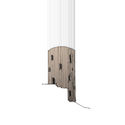
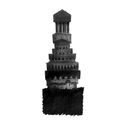
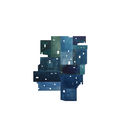
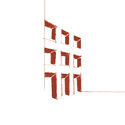
Italian architect Gaetano Boccia has been researching drawings and architectural representation for the past two years. The Pdda (piccoli disegni di architettura) project was born with the intention of sharing Boccia's thoughts, which he has always cataloged and kept in notebooks.
Referring to no particular buildings, these drawings are part of an inspirational process that takes place in the architect's daily context and complex surroundings of Naples and Italian culture.
 + 25
+ 25
https://www.archdaily.com/916330/pdda-a-series-of-small-architectural-drawings Fernanda Castro
Black And White Architectural Drawings
Source: https://www.archdaily.com/tag/architectural-drawings
Posted by: davidsonfultses.blogspot.com
0 Response to "Black And White Architectural Drawings"
Post a Comment